

Maternity photoshoot dresses follow a formula: fitted stretch-jersey gowns that hug the bump, off-shoulder necklines with fitted arms, and sheer overlay styles with a fitted slip beneath. All of them are designed to skim close to the body — which means bra outlines show — and all of them meet skin that's playing by pregnancy rules: more sensitive, more reactive, and often a full cup size or two bigger than your pre-pregnancy bras expect.
Your Answer, Up Front
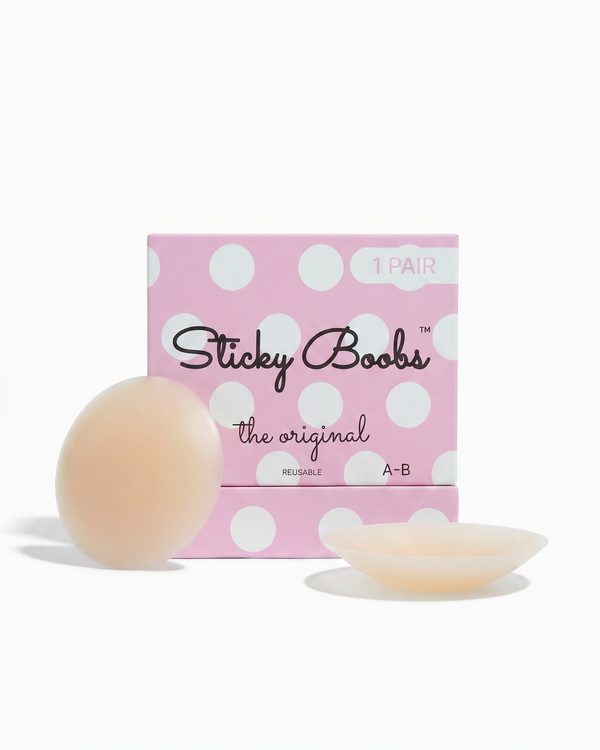
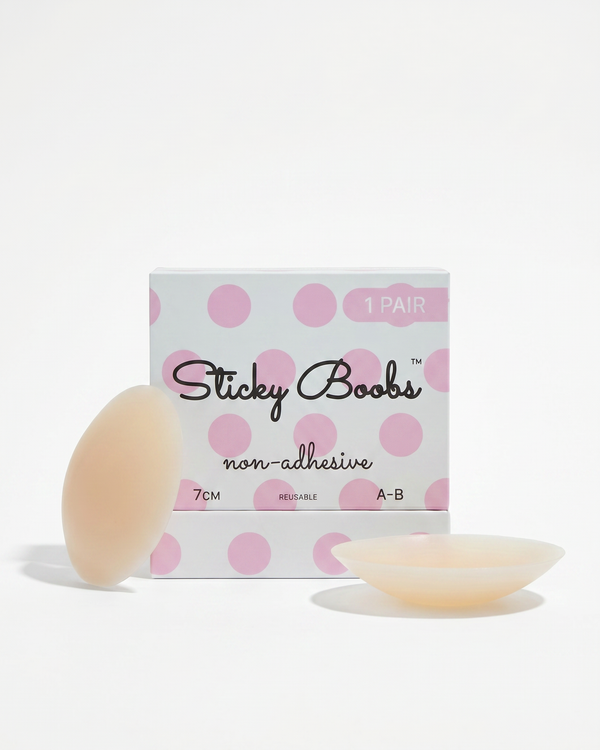
Start with Non-Adhesive Nipple Covers ($25) — the same ultra-thin silicone as adhesive covers but with no adhesive layer, held in place by the silicone's natural tack plus the gentle pressure of a fitted gown. Pregnancy skin gets the gentlest option first. Fitted jersey maternity gowns provide exactly the snug contact these covers need, which makes this pairing unusually perfect. If your dress is looser or you prefer adhesive security, The Original Sticky Boobs ($25) are generally pregnancy-fine — but patch test first, every time.
Why Non-Adhesive Leads During Pregnancy
Pregnancy hormones make skin more reactive: products you've used for years can suddenly irritate, and the breast and nipple area is the most sensitized of all. Adhesive silicone is generally considered fine in pregnancy, but 'generally fine' isn't the standard you want the week of your shoot. Non-adhesive covers sidestep the question — nothing bonds to your skin, so there's nothing to react to and nothing to peel off tender skin afterward. They stay put through the tack of medical-grade silicone plus light garment pressure, and a fitted maternity gown supplies constant, even contact from bump-hugging stretch fabric. Under exactly this dress type, they perform like adhesive without the adhesive.
Sizing When Your Cup Size Has Changed
Here's the note most guides skip: buy covers for your current size, not your pre-pregnancy size. Covers come in Cup A–B, B–C, and C–D+, and by the third trimester — when most maternity shoots happen, around weeks 30–36 — many women are a size or two up. A cover that's too small won't blur the bust point fully under clingy jersey. When in doubt between two sizes, take the larger; the feathered edge hides either way, but coverage only works if the cover actually covers.
If You Choose Adhesive: Patch Test Protocol
Adhesive covers are the right call under looser maternity styles — floaty off-shoulder gowns or sheer overlays without a fitted slip — because they don't rely on garment contact. Do this one week before the shoot: apply one cover to the side of your breast (not the nipple) for two hours, remove slowly, and watch the spot for 24 hours. No redness or itch, you're clear for shoot day. Any reaction, switch to non-adhesive and choose the more fitted gown option. Never apply adhesive over irritated, broken, or freshly-lotioned skin — and pregnancy belly-and-chest moisturizing routines count, so keep the bust area product-free on shoot morning.
Shoot-Day Steps
- Shower, and keep all belly oil and lotion below the bust line today — it migrates, and both cover types prefer clean skin.
- Slip non-adhesive covers into place as you put the gown on; the fabric holds them as it settles. For adhesive covers, press each in place for ten seconds first.
- Do the profile check in a mirror: maternity shoots are shot side-on to celebrate the bump, so confirm the bust line is smooth from the side, not just the front.
- For sheer-overlay gowns, check the covers read as skin in bright window light — Light, Tan, or Dark, matched to you.
- Bring a robe for between setups, and if the shoot is outdoors at golden hour, expect warmth: non-adhesive covers don't mind sweat, which is one more point in their favor.
- Afterward, rinse covers with mild soap, air dry — reusable for the newborn photos and beyond.
Honest Notes
Two things. If your gown is very loose through the bust — some flowy tulle styles float completely off the body — non-adhesive covers won't have the contact they need, and adhesive (patch-tested) is the working option. And if you're planning to breastfeed and your shoot is late enough that you're leaking colostrum, put a thin nursing pad moment between you and silicone at home first — silicone wipes clean, but you'll want to know your own situation before a two-hour session.
FAQ
Are adhesive nipple covers safe during pregnancy?
Generally yes — medical-grade silicone adhesive is considered pregnancy-fine — but skin is more reactive during pregnancy, so patch test on the side of the breast a week before your shoot. Non-adhesive covers skip the question entirely.
What size nipple covers do I need in the third trimester?
Your current size, not your pre-pregnancy size — most women are up a cup size or two by weeks 30–36. If you're between the A–B, B–C, and C–D+ options, size up so the cover fully blurs the bust point.
Do non-adhesive covers stay put under a fitted maternity gown?
Yes — fitted stretch jersey provides the constant light pressure non-adhesive covers need, so they hold through a full session. It's under loose, floaty gowns with no bust contact that they shift.
What goes under a sheer maternity photoshoot gown?
Skin-tone silicone covers matched to your complexion — they read as skin where the overlay goes transparent. If the sheer gown has no fitted slip beneath, use the adhesive version since the fabric won't hold non-adhesive covers in place.
Gentle on the skin, invisible on camera — Non-Adhesive Nipple Covers were practically designed for bump season.
Not sure which one your outfit needs?
Take our 60-second quiz and get matched to the right sticky bra, nipple covers, or boob tape for your exact dress — then shop it in a couple taps.