

There's a wedding on the calendar, the dress is backless, and you're twenty-two weeks pregnant: can the sticky bra come too? Short version, usually yes, but pregnancy changes both your skin and your size fast enough that the routine that worked in January needs adjusting by June. One framing note before we start: this is practical getting-dressed guidance, not medical advice, and your OB or midwife outranks any blog.
The Quick Answer
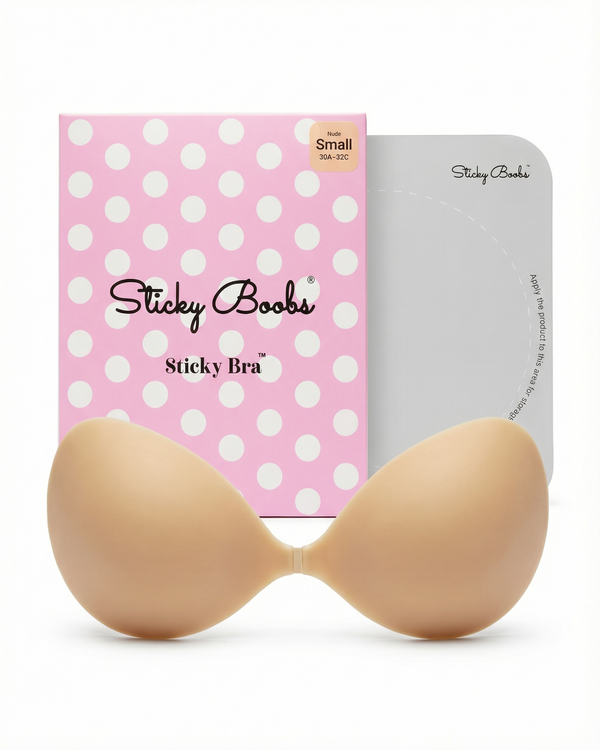
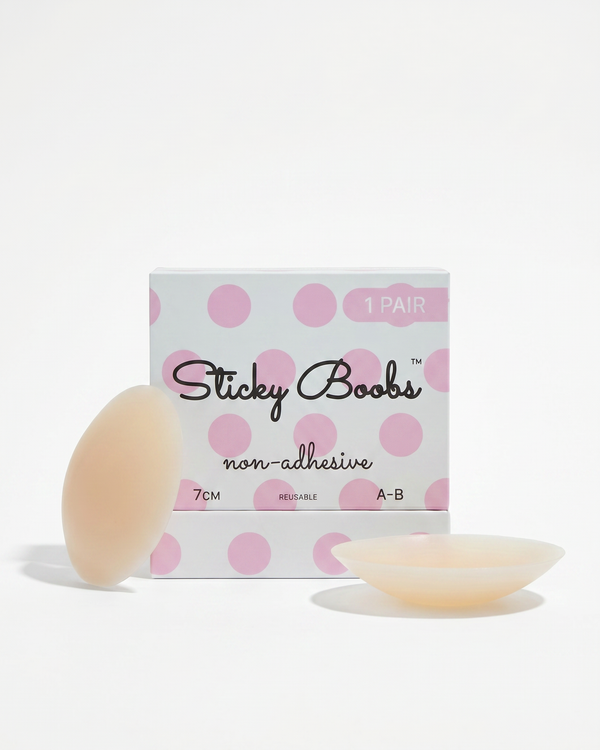
Generally, yes, you can wear a sticky bra while pregnant. Medical-grade silicone adhesive on healthy, intact skin poses no known risk to a pregnancy. The two real caveats are practical: pregnancy skin is more sensitive and may react to adhesive it previously tolerated, so patch test before every event, and breast size changes quickly, so check your fit each time. If adhesive feels like too much right now, Non-Adhesive Nipple Covers ($25) are the gentler route. Comfort trumps everything; the moment anything feels wrong, take it off.
Your Skin Is Playing by New Rules
Pregnancy hormones raise skin blood flow and reactivity, which is why women who've worn adhesive bras for a decade suddenly find them itchy in the second trimester. It's rarely a true allergy, just a lowered irritation threshold, and it can shift month to month. So borrow the dermatology habit: patch test. Press a corner of the cup (or a small piece of tape) to the skin under your collarbone or on your ribcage, leave it a few hours, and check for redness or itching before committing to a full evening. Also remember breast skin may be tender independent of adhesive; if your breasts currently hate being touched, an adhesive cup pressed firmly onto them won't be the exception.
Sizing When Nothing Stays the Same Size
Most women gain at least a cup size during pregnancy, and it doesn't arrive on a schedule. The Sticky Bra ($35) runs Small (30A to 32C), Medium (32C to 36D), and Large (36D to 42DD); if the event is weeks away, hold off ordering until closer, and if you're between sizes, take the larger one, since a snug cup on tender tissue is the wrong kind of memorable. The clasp still gives you lift and cleavage the usual way; some women actually find the front-clasp support more comfortable than an underwire band pressing a growing ribcage.
The Gentler Route: Skip the Adhesive Entirely
Non-Adhesive Nipple Covers ($25) were practically designed for this season of life: the same medical-grade silicone, but they stay put through the silicone's natural tack plus light pressure from a snug garment, with zero glue on reactive skin. They're size-agnostic week to week, comfortable through long days, and perfect under the stretchy, fitted dresses that flatter a bump. The tradeoff is no lift and the need for at least a snug layer holding them; a loose floaty dress with no chest contact won't keep them in place.
Event-Day Routine, Pregnancy Edition
- Patch test 24 hours ahead, even if last month's test was fine; your skin's rules keep changing.
- Confirm fit that week: cup should cover the breast without pressing an edge into tissue.
- Skip belly-and-chest moisturizer that day (rub it on after the event instead; stretch-mark cream and adhesive can't share a chest).
- Apply in a cool room, one cup at a time, unclasped and angled slightly out and down, then clasp gently; skip the aggressive cinch if you're tender.
- Plan a shorter wear window than usual and build in a removal escape hatch, like a wrap or shawl, in case you want it off at hour six.
- Remove slowly, wash the skin, and moisturize generously; pregnancy skin loves the aftercare.
When to Sit It Out
Skip adhesive entirely if your chest skin is itchy, rashy, or broken (PUPPP and general pregnancy itch often hit the torso), if a previous patch test reacted, or if your breasts are so tender that firm pressing sounds awful. And leaking colostrum in the third trimester is normal but doesn't mix with adhesive cups; that's non-adhesive covers territory, or simply a supportive dress and done.
FAQ
Is it safe to wear a sticky bra during pregnancy?
For most people, yes; medical-grade silicone adhesive on healthy, unbroken skin isn't a pregnancy risk. The practical issues are that pregnancy skin is more reactive, so patch test first, and that breast size changes fast, so last trimester's size may no longer fit. This is general guidance, not medical advice; ask your OB or midwife about your specific situation.
Why is my skin suddenly sensitive to adhesive while pregnant?
Pregnancy hormones increase blood flow to the skin and can heighten its reactivity, so adhesives you've worn for years may itch or redden now. It usually isn't an allergy appearing from nowhere, just a lower irritation threshold; a patch test before each event tells you where yours currently sits.
What size sticky bra should I buy while pregnant?
Buy for the size you are this month, not your pre-pregnancy size, and re-check before each event; many women go up a cup or more per trimester. If you're between sizes, size up, since a too-small cup presses on breast tissue that's likely already tender.
Are non-adhesive nipple covers better than a sticky bra during pregnancy?
For comfort, usually yes. Non-adhesive silicone covers hold through the silicone's natural tack plus garment pressure, with no glue on reactive skin, and they don't care what size your breasts are that week. You give up lift, so pair them with a dress that has its own structure.
Backless dress, bump, and all: patch test, size for today, and if glue sounds unappealing, the Non-Adhesive covers have you the gentle way.
Not sure which one your outfit needs?
Take our 60-second quiz and get matched to the right sticky bra, nipple covers, or boob tape for your exact dress — then shop it in a couple taps.